Choosing between aluminum and galvanized steel suspended ceilings affects weight, corrosion resistance, structural performance, and budget in large-scale projects. Architects should therefore consider more than appearance or initial purchase price when selecting materials for metal ceiling systems.
BS EN 13964 covers performance areas such as load capacity, durability, fire performance, acoustics, and installation for suspended ceilings. Therefore, project teams should clearly define the required performance criteria and operating conditions before selecting a material.
Which Projects Benefit from Aluminum Suspended Ceilings?
An aluminum suspended ceiling can be a strong option for projects requiring low system weight and high corrosion resistance.
Üçler TrioMat T Systems range offers aluminum, galvanized steel sheet, and stainless steel material options for different project requirements. This variety allows us to shape material selection around the operating environment, design objectives, and specific project requirements.
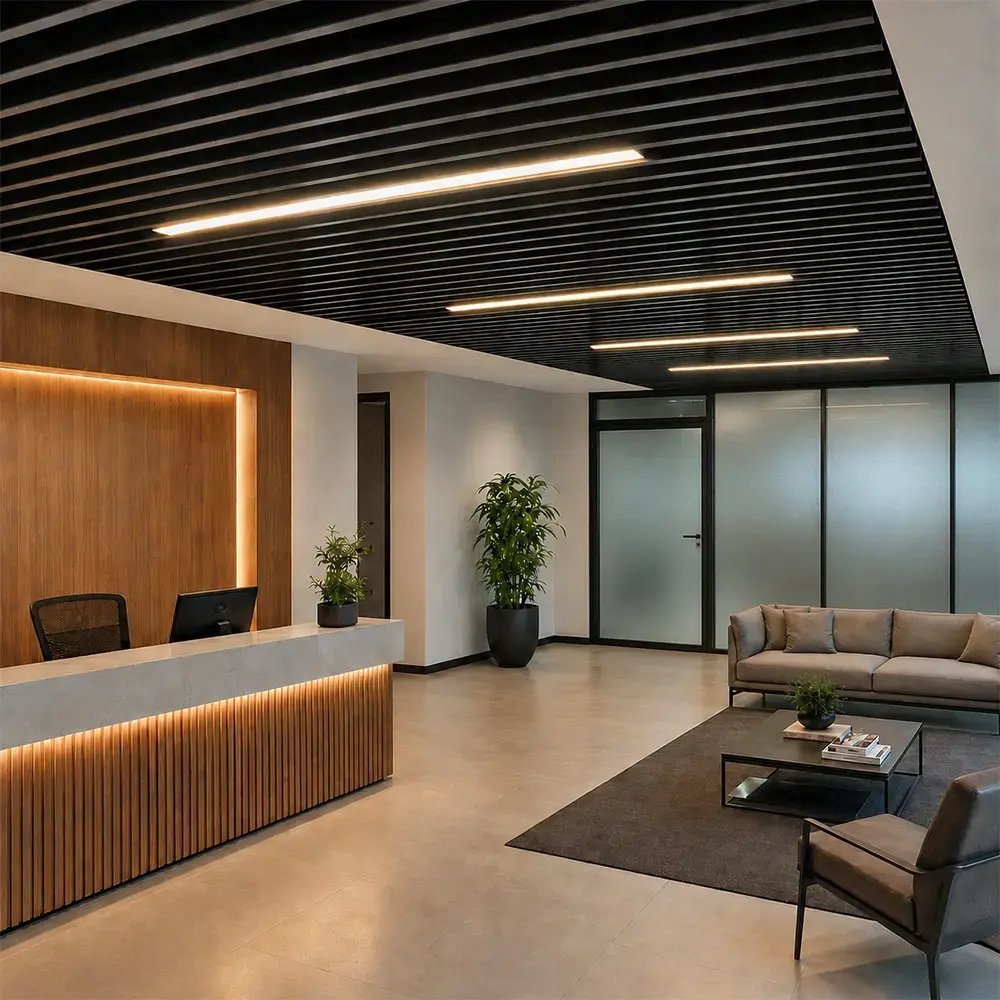
For different architectural geometries, Baffle Suspended Ceiling systems can also use aluminum or galvanized steel sheet. Material selection should therefore be evaluated together with panel geometry and the specific project environment.
When Should a Galvanized Steel Suspended Ceiling Be Selected?
A galvanized steel suspended ceiling can be a strong alternative for large interiors where rigidity and cost control are key priorities. Üçler TrioMat’s Clip-in Concealed Carrier system offers different metal material options, including aluminum and galvanized steel sheet.
Similarly, the Bandraster Suspended Ceiling system can be manufactured in aluminum, galvanized steel sheet, or stainless steel. The system is particularly suitable for large areas where frequent access to building services is required.
For galvanized steel, performance depends not only on the base material but also on sheet thickness and the surface coating system. Project teams should therefore assess panel dimensions, perforation ratio, and supporting system characteristics within the same technical evaluation.
Maintenance and service access should also be considered independently of material selection in large-scale projects. Removable or accessible panel configurations can simplify work on electrical, ventilation, and other building services throughout the operational life of the facility.
How Should Corrosion Resistance Be Compared?
Corrosion resistance should be evaluated according to the operating environment, as humidity, pollutants, and airborne salts directly affect metal surfaces. Therefore, in systems such as Mesh Suspended Ceilings, which offer several metal options, material and surface treatment should reflect actual project conditions. Available materials include aluminum, galvanized steel sheet, and stainless steel.
Aluminum provides natural corrosion resistance, while galvanized steel relies primarily on its protective zinc coating. Particularly in coastal or humid environments, exposure conditions should directly guide the selection of coatings and surface treatments.
Long-term performance also depends on surface integrity around panel edges, perforations, and connection points. Project teams should therefore examine metal type, surface finish, and panel-processing details within the same technical assessment.
Using different metals within the same system also requires careful planning of connection details. Suitable fasteners and regular maintenance can help manage the risk of surface deterioration in humid environments.
How Should Ceiling Weight and Load Capacity Be Evaluated?
Ceiling weight is a system-level consideration that includes panels, supporting profiles, hangers, connections, and related service loads. EN 13964 covers criteria such as load capacity, dimensional tolerances, and resistance to moisture for suspended ceiling components.
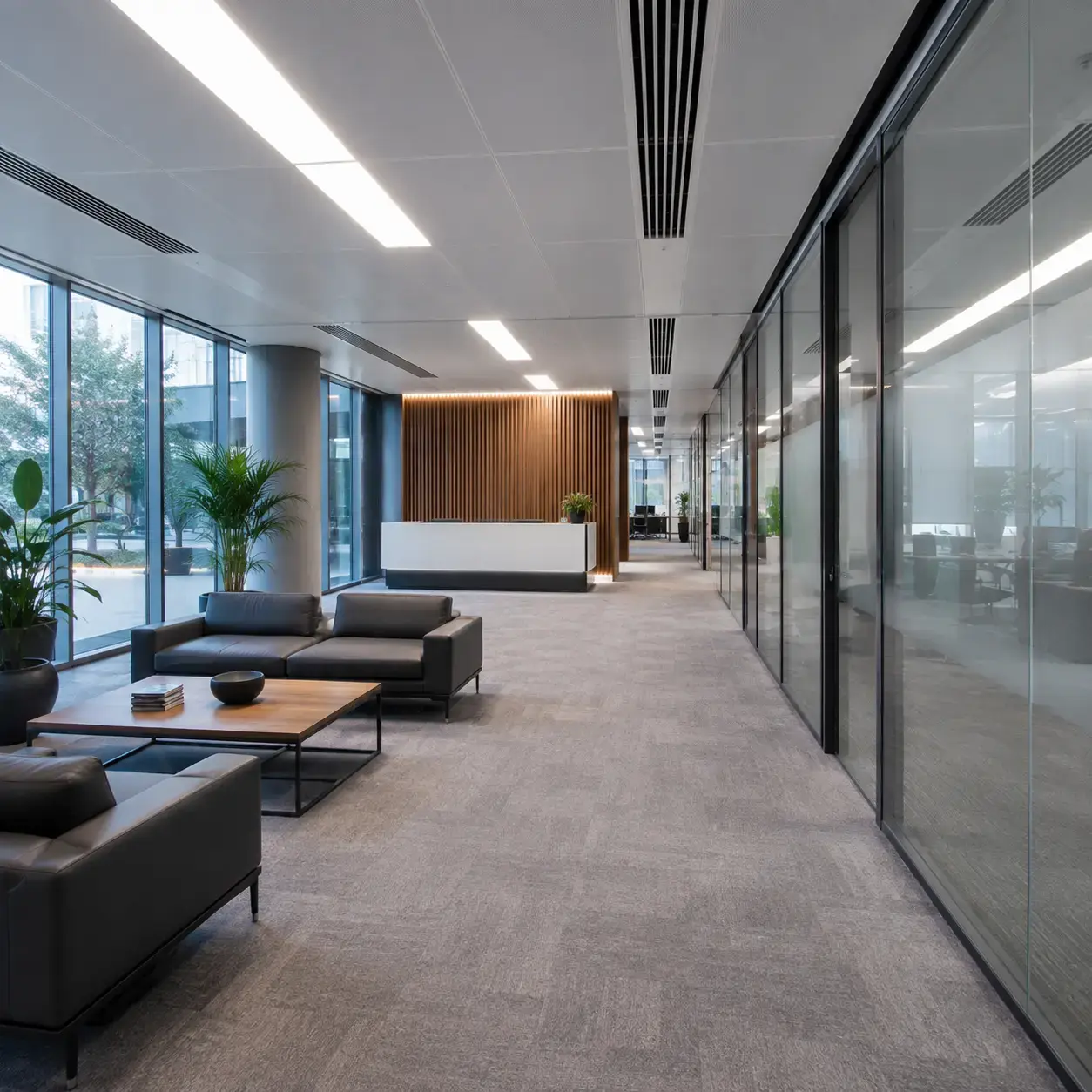 Therefore, ceiling load capacity should not be determined solely by choosing aluminum or steel. Project teams should compare panel thickness, profile geometry, hanger spacing, and manufacturer system data within the same structural assessment.
How Should Metal Ceiling Cost Be Compared?
When calculating metal ceiling cost, project teams should compare the finished cost per square meter and total installation cost rather than material price per kilogram. Material thickness, perforation, surface treatment, supporting systems, transport, installation, and maintenance requirements all contribute to the overall budget.
The low weight of aluminum can provide transport and installation advantages in some projects, although actual costs depend on project-specific conditions. For galvanized steel, sheet thickness, zinc coating grade, and additional surface treatments can directly affect the final cost.
 Which Material Should Be Selected for Airport Ceiling Systems?
Material selection for airport ceiling systems should consider area size, environmental conditions, maintenance access, and operational intensity together. Aluminum stands out for its low weight and natural corrosion resistance, while galvanized steel can offer advantages where greater rigidity and cost control are required.
In terminal buildings, regular access to electrical, ventilation, fire-safety, and communication systems above the ceiling is an important design requirement. Removable panels, accessible support layouts, and suitable panel dimensions can therefore help maintenance work proceed more efficiently and under better control.
Acoustic performance, fire requirements, and surface durability are also key parts of the selection process. When panel perforation, acoustic backing, surface finishes, and connection details are considered together, the system can be planned more effectively for high passenger traffic.
Systems such as Bandraster Suspended Ceilings allow different panel and metal options to be evaluated across large areas. In particular, the balance between service access, panel geometry, and material selection should reflect the intended use of the project.
Transportation and airport projects provide a useful reference for reviewing ceiling solutions used in terminal buildings of different scales. In these projects, material selection should consider not only the metal itself, but also maintenance access, architectural integration, system performance, and long-term operating conditions.
