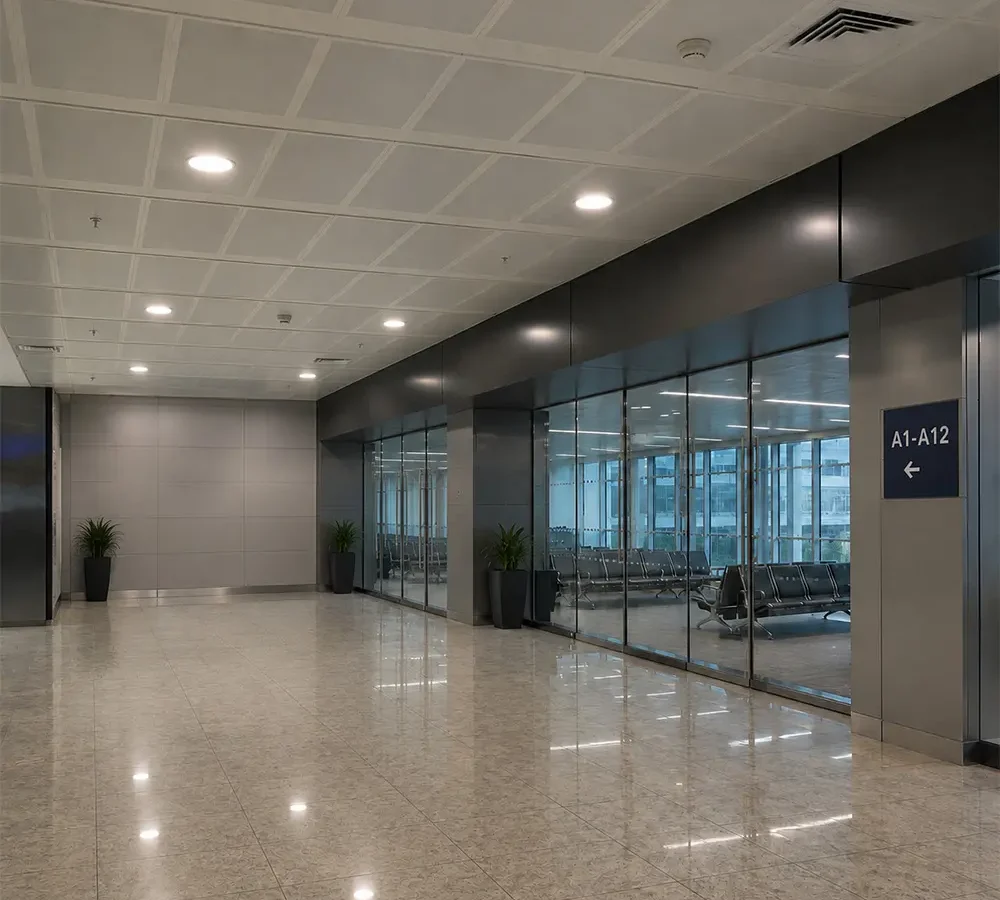
Suspended ceiling systems for transportation facilities combine durability, maintenance access, and technical coordination within one architectural surface. High passenger density, continuous operation, and extensive service zones directly influence ceiling selection in airports and metro stations.
BS EN 13964 covers performance areas such as load-bearing capacity, fire, acoustics, electrical safety, and installation for interior suspended ceilings. However, the standard excludes external ceilings requiring additional provisions, so semi-open areas require project-specific assessments.
How Should Wind Load and Vibration Resistance Be Managed?
Air pressure at terminal entrances and semi-open platforms can create additional suction and pressure forces across large panel surfaces. Therefore, teams should calculate suspension spacing, panel connections, and carrier geometry together according to actual site conditions.
Vibrations from metro lines and technical equipment can increase the risk of loose connections or unwanted noise over time. Consequently, engineers should select fixing details, panel mass, and suspension systems with dynamic effects in mind.
Local requirements become particularly important for projects in seismic regions. ASTM E580/E580M defines seismic installation practices for specific suspended ceiling systems, while local requirements determine applicability.
How Should Maintenance and Service Access Be Planned in Airports?
Airport ceiling systems should provide regular service access to lighting, HVAC, fire protection, data, and wayfinding infrastructure. Removable panels can support controlled maintenance without requiring a complete shutdown of terminal operations.
Bandraster Suspended Ceiling conceals lighting and electrical services within carrier channels while supporting frequent access across large areas. Sabiha Gökçen Airport is also included among Üçler TrioMat’s transportation references.
Baffle Ceiling supports air circulation through open panel spacing and can reduce the visual impact of mechanical services. Ghana Kotoka Airport provides an application example of this product group in a transportation facility.
Which Ceiling Systems Stand Out in Metro Stations?
Design teams should consider service access, fire safety, durability, and intensive daily use when selecting a metro station suspended ceiling. Open-cell systems can provide a more flexible ceiling arrangement for reaching maintenance points.
Open Cell Ceiling combines modular open-cell geometry with technical services and architectural rhythm within the same ceiling layout. The Open Cell application at Bayrampasa Metro Station demonstrates how this structure can serve transportation environments.
Mesh Ceiling supports lighting and air circulation while visually screening mechanical services through its semi-transparent surface. Teams should also coordinate cell openings, service access, and overhead installations with passenger sightlines.
How Should Acoustics, Fire Safety, and MEP Access Be Coordinated?
In high-traffic facilities, ceilings should support sound control while integrating fire detection, sprinklers, and air distribution systems. Therefore, teams should coordinate perforation, acoustic layers, luminaires, and diffusers early within a shared ceiling plan.
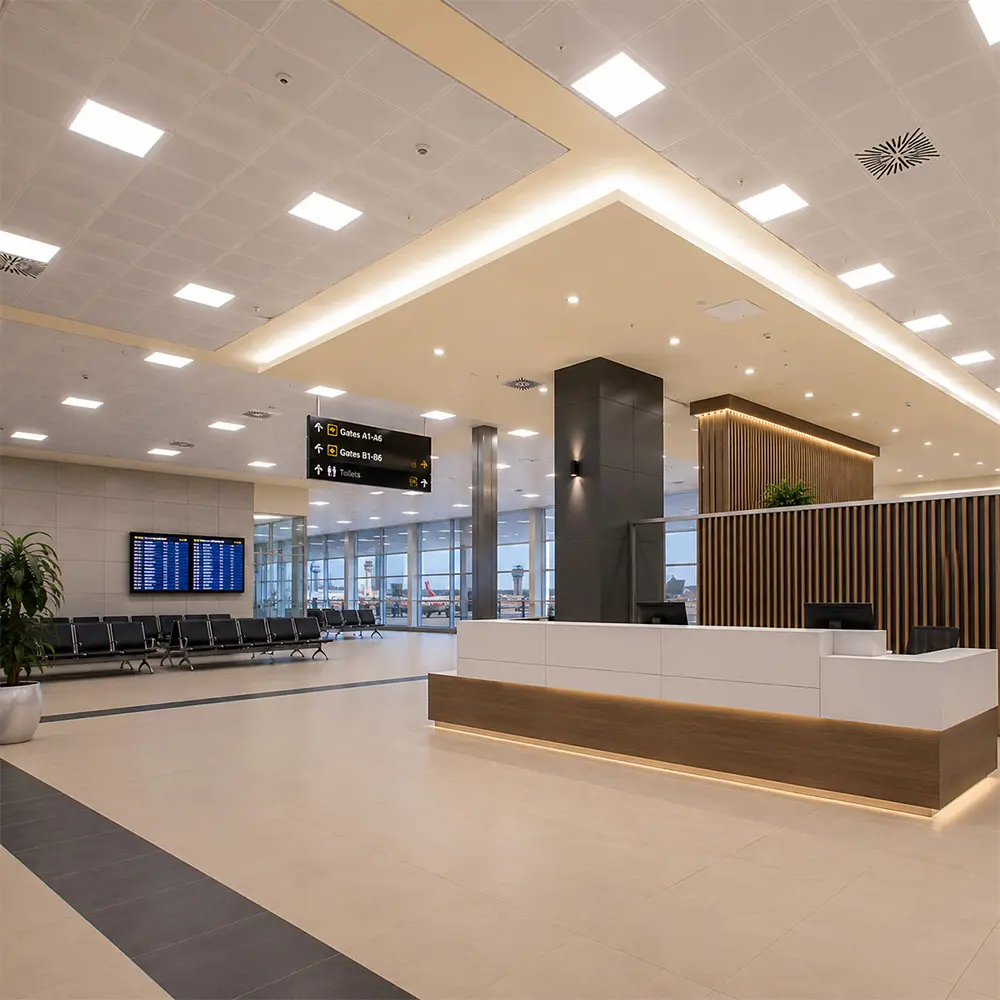 This coordination should cover long-term maintenance and service access, rather than focusing only on equipment placement. Consequently, teams can reduce on-site interventions while maintaining greater control over architectural continuity.
How Should Ceiling Selection Be Finalized for Transportation Projects?
Project teams should assess span, maintenance frequency, corrosion, vibration, acoustic targets, and MEP access when selecting materials and systems. In transportation and airport projects, large spans, heavy passenger traffic, and continuous maintenance make coordinated service access essential.
Üçler TrioMat considers ceiling systems in airport and metro projects an important component of operational performance, not merely an architectural element. Heavy passenger traffic, maintenance access, and long service life form the foundation of our solution approach in this field.
